If you’ve been searching for an orchid that rewards you without demanding perfection, Brassavola nodosa might just be your new favourite. Compact, resilient, and utterly charming, this Central American native has earned a devoted following among orchid enthusiasts worldwide — and once you understand what makes it tick, it’s easy to see why.
What Is Brassavola nodosa?
Brassavola nodosa, commonly known as the Lady of the Night orchid, is a species native to Mexico, Central America, and parts of the Caribbean. It grows naturally on trees and rocky outcrops, clinging to surfaces where air circulation is excellent and rainfall is seasonal. Its most celebrated feature is its fragrance — a sweet, intense perfume released after dark that can fill an entire room.
But beyond the scent, Brassavola nodosa is quietly one of the most practical orchids you can grow. It’s compact, tolerant of neglect, and adaptable to a range of growing conditions — a combination that makes it an excellent choice for beginners and experienced growers alike.
Growth Habit: Small but Mighty
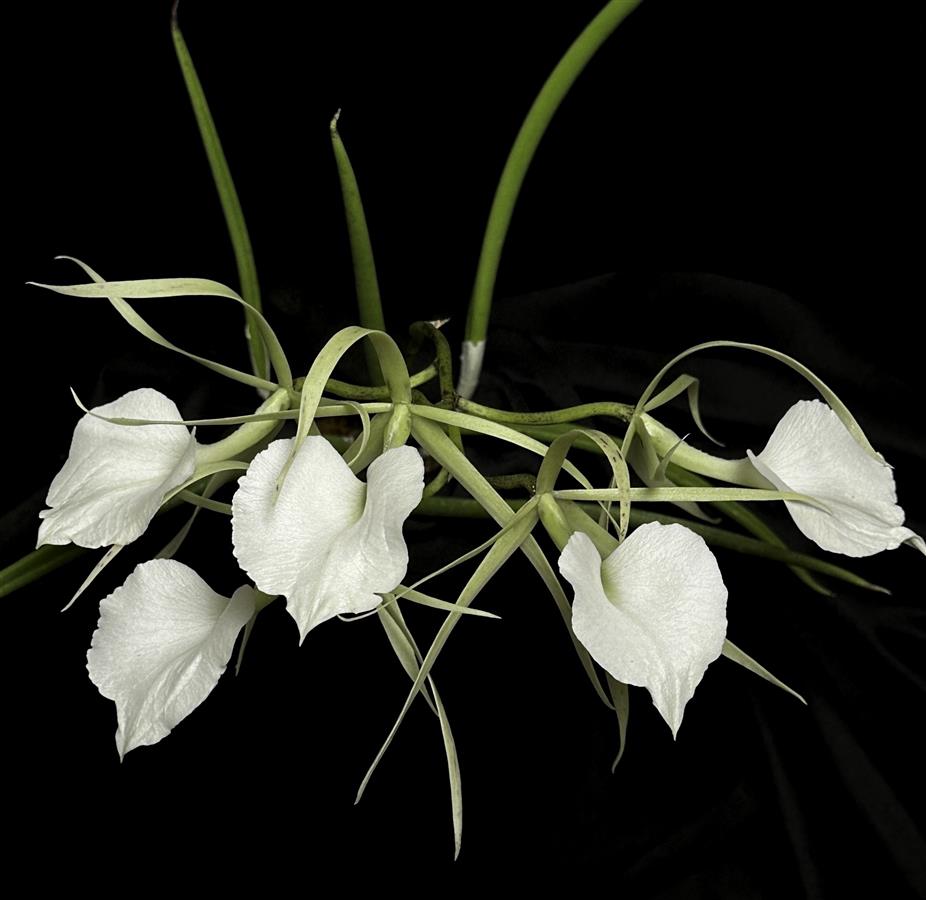
One of the most appealing aspects of Brassavola nodosa is its compact growth habit. Unlike some of its showier orchid cousins that demand considerable space, this species stays relatively small and tidy. The leaves are distinctive — long, narrow, and almost pencil-like — giving the plant an architectural quality that looks attractive even when it’s not in bloom.
New growths emerge from pseudobulbs, with each growth typically producing one or two leaves and eventually a flower spike bearing anywhere from one to six blooms. The flowers themselves are elegant and spidery, with narrow white to pale greenish-white petals and a broad, white, heart-shaped lip.
Because of its restrained size, Brassavola nodosa is ideal for growers with limited space — a windowsill, a small shadehouse, or a bright bathroom shelf can all work beautifully.
Is Brassavola nodosa Easy to Grow?
Honestly? Yes — with a few caveats. Brassavola nodosa is frequently recommended as one of the more beginner-friendly orchid species, and for good reason. It is notably more forgiving than many other orchids, but like all plants, it does have preferences worth understanding.
Light
Brassavola nodosa enjoys bright light, and plenty of it. In its natural habitat it often grows in full sun or near-full sun conditions. Indoors, a bright south or east-facing windowsill works well. Outdoors in Australia, dappled light or a position with morning sun suits it perfectly. Insufficient light is one of the most common reasons this orchid fails to flower, so don’t be shy about giving it a bright spot.
Temperature
This species is warm to intermediate growing, preferring temperatures between 18–32°C during the day. It can tolerate brief cool spells but doesn’t appreciate prolonged cold or frost. In most parts of Australia it will grow happily outdoors for much of the year.
Watering
Here’s where Brassavola nodosa shows its easygoing side. It tolerates drying out between waterings. Its pencil-like leaves are actually a clever adaptation for water storage, allowing the plant to shrug off a missed watering or two. Water generously when you do water, then allow the roots to dry before watering again. In cooler months, ease off.
Fertilising
Feed regularly during the growing season with a balanced orchid fertiliser, reducing frequency in winter. This is not a heavy feeder.
To Mount or Not to Mount?
This is where Brassavola nodosa really comes into its own, because the answer is a resounding: yes, mount it if you can.
As an epiphyte that clings to trees in the wild, Brassavola nodosa is exceptionally well suited to mounting on cork bark, tree fern slabs, or driftwood. Mounted plants benefit from the excellent air circulation and fast-drying conditions that closely mimic its natural environment. Many growers find that mounted specimens not only look stunning but also bloom more reliably and are less prone to root rot than those grown in pots.
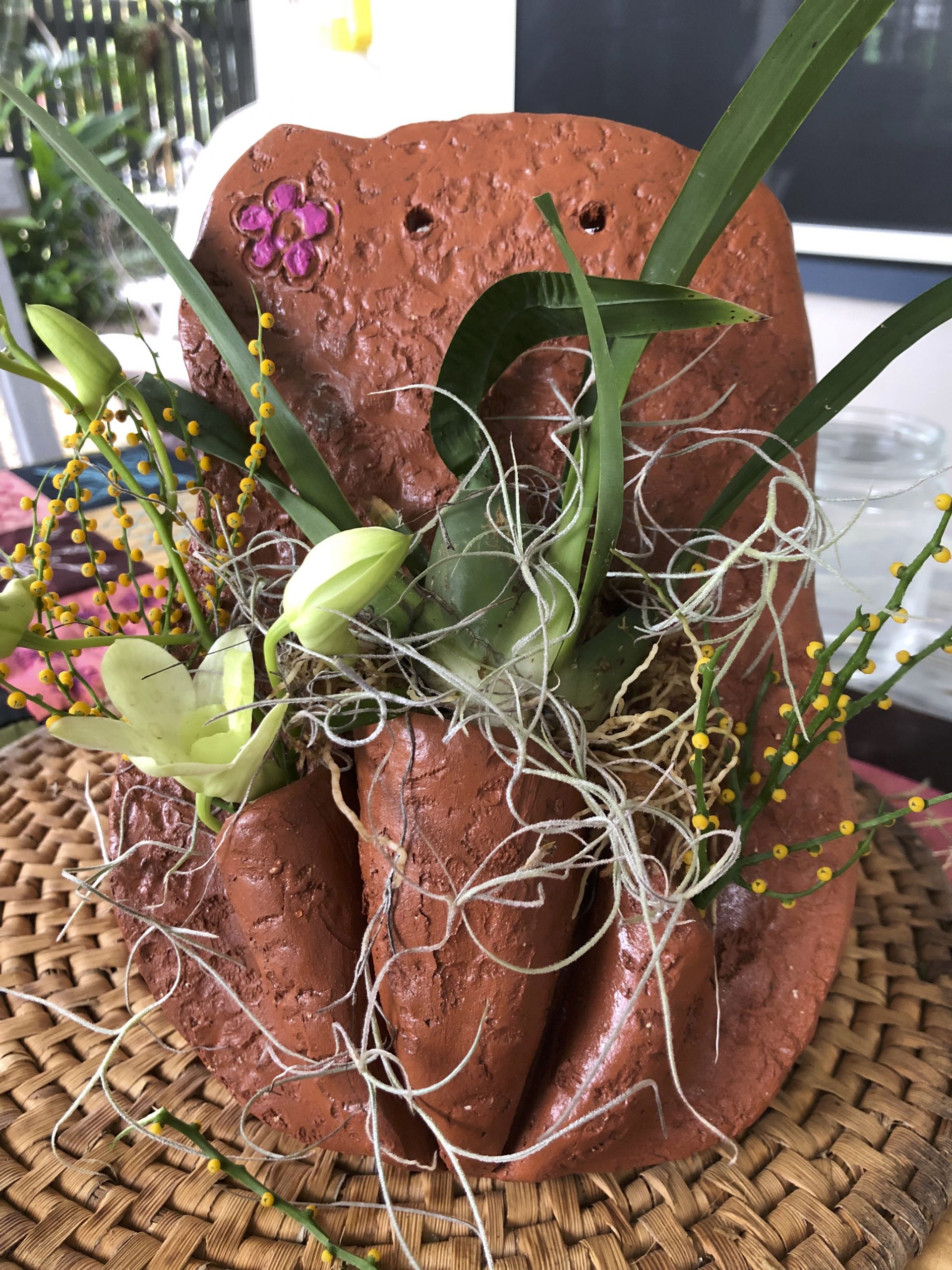
If you’re looking for something truly special, Brassavola nodosa also mounts beautifully on handcrafted leaf orchid mounts, available right here at Little Flower Business. The combination of the plant’s elegant, trailing habit and the natural aesthetic of a leaf mount creates a living piece of art — and because the mounts are designed with orchid growing in mind, they provide exactly the kind of fast-draining, well-ventilated environment that Brassavola nodosa thrives on.
When mounting, attach the plant to your chosen substrate using fishing line or soft ties, with a small amount of sphagnum moss between the roots and the mount to help retain just a little moisture during establishment. Once the roots take hold and begin to ramble across the mount, the plant becomes wonderfully self-sufficient.
That said, Brassavola nodosa will grow happily in a pot if mounting isn’t your preference or your climate is very dry. Choose a small pot — this orchid likes to be snug — and use a very open, free-draining medium such as bark, perlite, or a chunky orchid mix. Terracotta pots are an excellent choice as they allow moisture to evaporate through the sides, reducing the risk of soggy roots.
Why You Should Add Brassavola nodosa to Your Collection
To summarise why this little orchid deserves a spot in your garden or home:
- Compact size — perfect for small spaces and collections
- Forgiving nature — tolerates imperfect watering and care
- Stunning fragrance — an extraordinary night-time scent
- Thrives when mounted — a natural epiphyte that looks spectacular on cork, tree fern, or a handcrafted leaf mount
- Reliable bloomer — flowers more than once a year under good conditions
- Adaptable — grows well in pots or mounted, indoors or out
Whether you’re just beginning your orchid journey or you’re a seasoned grower looking to add something special, Brassavola nodosa is a species that consistently over-delivers. Give it bright light, good air movement, and the occasional good drink — and it will reward you with those magical, fragrant blooms time and time again.
For more about growing orchids see my four part series here and The American Orchid Society