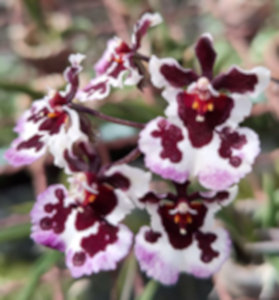
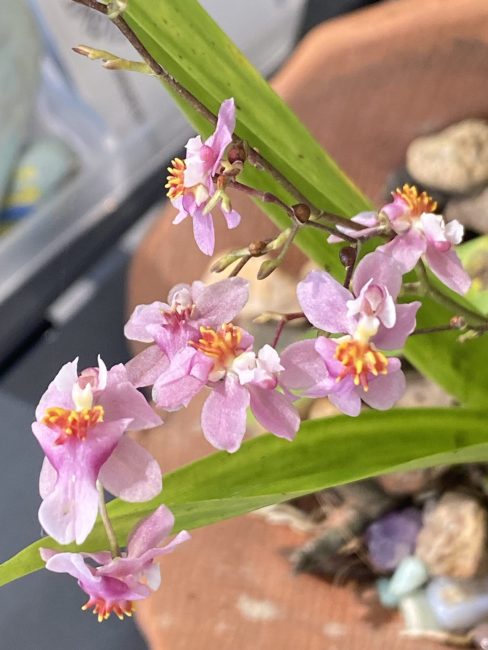
Miniature orchids have become increasingly popular among collectors and beginner growers due to their compact size, charming flowers and the ability to fit large collections into relatively small growing spaces.
Whether mounted on ceramics, displayed in miniature baskets or grown in small potsnjewels, these diminutive plants often captivate growers with their delicate beauty.
However, one question frequently arises among orchid enthusiasts: why do miniature orchids seem to grow so slowly?
The answer lies not in poor health or inadequate cultivation, but largely in their biology and evolution. Understanding why miniature orchids grow differently can help growers adjust their expectations and provide the best possible care.
Why Do Miniature Orchids Grow Slowly?
One of the primary reasons miniature orchids appear slow growing is their limited leaf area. Photosynthesis is the process through which plants convert sunlight into energy, and larger plants generally have more leaf surface available to capture light. Miniature orchids, by definition, possess fewer and smaller leaves, resulting in a lower overall capacity to produce energy.
This does not necessarily mean they are unhealthy or struggling. Rather, they are operating within the constraints of their naturally compact size.
Many miniature orchid species have also evolved in habitats where resources are scarce. In nature, they often inhabit thin layers of moss on tree branches, exposed twigs and other locations where water and nutrients may be limited. As a result, these plants have adapted to use resources efficiently rather than grow rapidly.
Small Growth Does Not Always Mean Slow Growth
Another factor is perception. A standard-sized orchid may produce a new pseudobulb measuring 20 centimetres in height, while a miniature orchid may only produce a growth measuring 2 centimetres.
Although both plants may be growing at a similar relative rate, the miniature appears to make less progress because each new growth is much smaller.
This can lead growers to assume the plant is stagnant when, in reality, it is developing exactly as nature intended.
Do Breeders Create Slow-Growing Miniatures?
Not necessarily. When breeders produce miniature hybrids, they are typically selecting for compact growth, shorter leaves, smaller flowers or a reduced overall plant size. These characteristics are influenced by genetics, but compact growth does not automatically equate to slow growth.
In fact, many modern miniature and compact hybrids have been selected for their ability to flower frequently and perform well in cultivation. Some miniature orchids may bloom at a younger age than their larger relatives, even if their vegetative growth appears modest.
Does Slow Growth Affect Cultural Care?
Yes, understanding the growth habits of miniature orchids can influence how they should be grown.
Avoid Over-Potting
Miniature orchids generally possess smaller root systems than larger species. Using a pot that is too large can result in excessive moisture retention, increasing the risk of root rot.
Choose containers that closely match the size of the root system and allow the growing medium to dry appropriately between waterings.
Maintain Consistent Moisture
Many miniature orchids originate from environments where they receive regular moisture and humidity. While they should never remain waterlogged, they often benefit from more consistent moisture than larger orchids with substantial pseudobulbs.
Mounted plants may require daily watering during hot weather.
Provide Good Air Movement
Due to their small size and often dense root systems, miniature orchids appreciate excellent air circulation. Good airflow helps prevent fungal issues and encourages healthy root growth.
Fertilise Lightly but Regularly
Miniature orchids generally respond well to weak, regular fertiliser applications. Because their root systems are small, heavy feeding is rarely beneficial.
A balanced fertiliser applied at low strength during active growth is usually sufficient.
Be Patient
Perhaps the most important cultural requirement is patience. Miniature orchids often develop slowly, but many reward growers with regular flowering long before they become specimen-sized plants.
Judging progress by leaf count, root development and flowering frequency is often more useful than assessing overall plant size.
Not All Miniature Orchids Are Slow
While many miniatures develop gradually, some genera are surprisingly vigorous. Species and hybrids within Tolumnia, Schoenorchis and certain vandaceous groups can establish quickly and flower frequently when provided with suitable conditions.
As with all orchids, growth rates vary between species, hybrids and individual plants.
Conclusion
Miniature orchids are not necessarily slow-growing because of breeding. Rather, their growth habits reflect evolutionary adaptations to life in resource-limited environments. Their small leaves, compact root systems and naturally diminutive stature often create the impression of slow growth, even when they are performing perfectly.
For growers, understanding these characteristics can lead to better cultural practices and more realistic expectations. With appropriate care, miniature orchids can become rewarding and long-lived members of any collection, producing beautiful flowers while occupying only a fraction of the space required by larger orchids.
Frequently Asked Questions
Are miniature orchids harder to grow than standard orchids?
Not necessarily. Many miniature orchids are easy to cultivate provided their moisture, humidity and airflow requirements are understood.
Why is my miniature orchid not getting bigger?
Miniature orchids are genetically programmed to remain small. A healthy plant may be growing normally even if it increases in size very slowly.
Should miniature orchids be fertilised differently?
They generally benefit from weak, regular fertiliser applications rather than strong or infrequent feeding.
Do miniature orchids flower more often?
Some miniature species and hybrids flower surprisingly frequently, even when the plants themselves remain quite small.
Can miniature orchids be mounted?
Yes. Many miniature orchids thrive when mounted, provided adequate humidity and watering can be maintained.
Are miniature orchids suitable for small growing spaces?
Absolutely. Their compact size makes them ideal for windowsills, terrariums, shade houses and collectors wishing to maximise growing space.
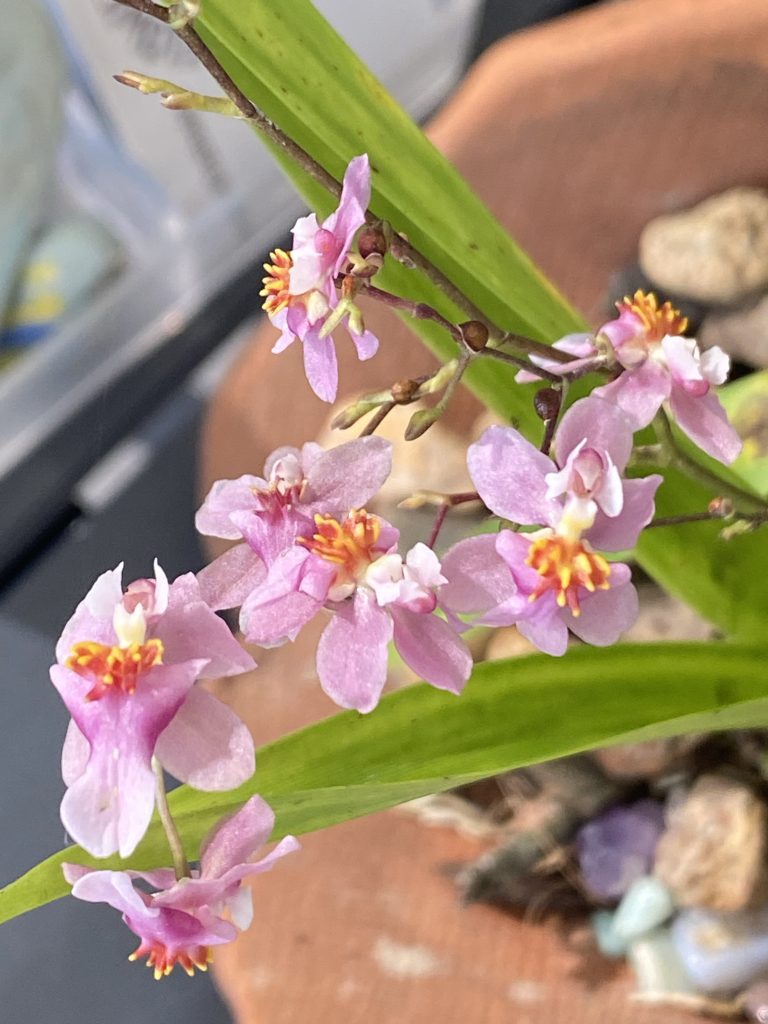
Miniature orchid: Oncidium Tsiku Marguerite ‘Chian-Tzy Dragon #1’