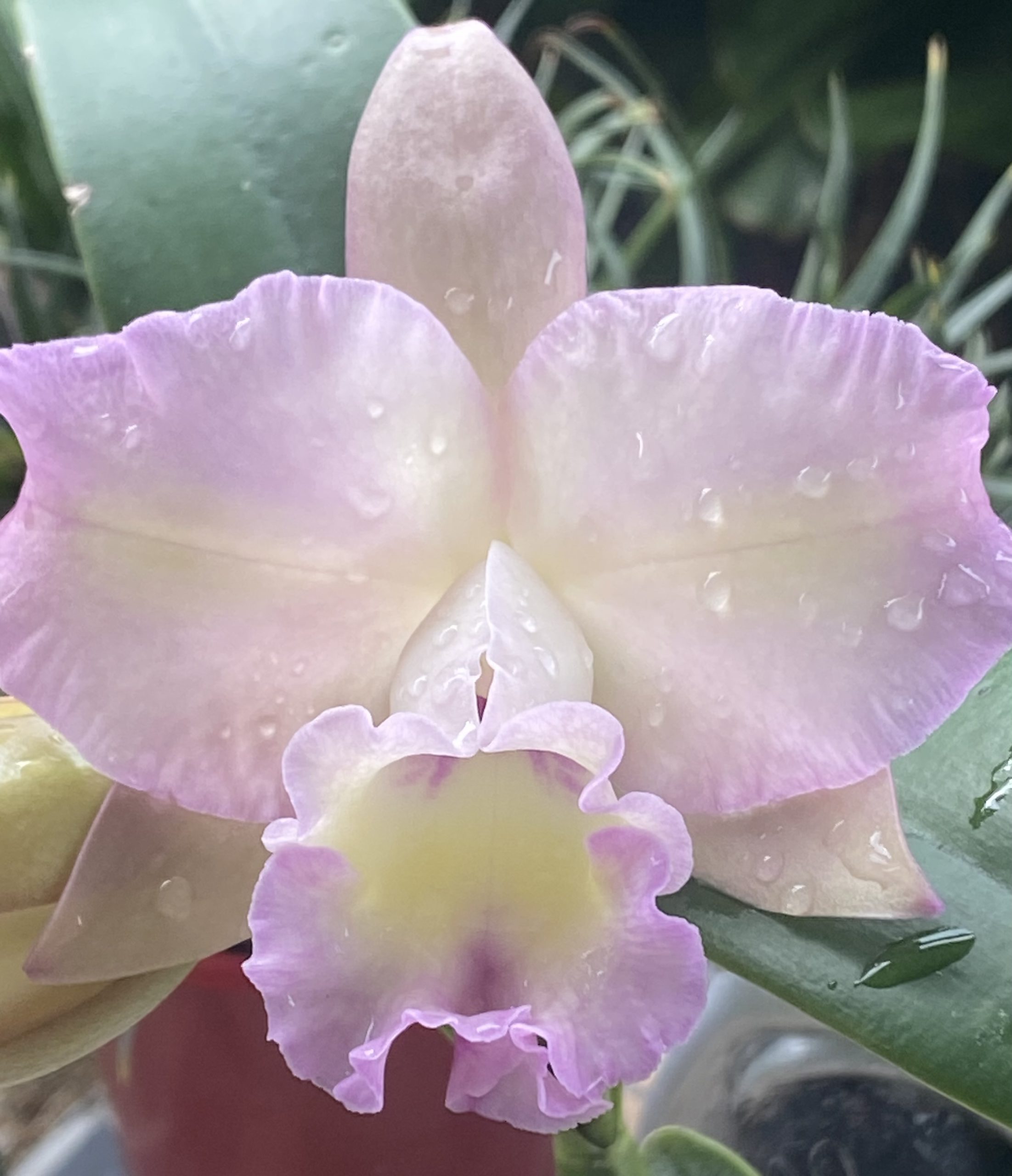
Why orchid propagation breaks all the rules of normal gardening
Gardeners are always looking for ways to get new plants. In most horticulture, propagation falls into two simple categories: asexual and sexual, meaning cuttings or seed respectively.In orchids, however, the usual rules no longer apply.
When you first become interested in orchids, you assume they are simply another flowering plant. Then you discover that orchids do not germinate like other plants, they do not propagate like other plants, and in many ways they do not appear to obey the basic rules of gardening at all.
This is often the beginning of a very deep rabbit hole. Suddenly you find yourself reading scientific papers instead of gardening books.
Why orchid seeds are not like normal seeds
- orchid seeds are extremely fine, almost dust-like in structure
- they contain no endosperm or stored food reserves
- in nature, they rely on a symbiotic relationship with orchid mycorrhizal fungi (OMF) to germinate.
Unlike most garden plants, where fine seed is rarely a barrier to success and surface sowing is often enough, orchids present a completely different challenge.
Without stored food reserves and without the presence of specialist fungi, natural orchid seed germination becomes highly unlikely. In fact, in many cases it is closer to “optimistic” than “reliable”.
Orchid mycorrhizal fungi: the invisible middleman
In nature, orchid seeds depend on microscopic fungi to supply the energy they lack. In other words, orchids do not start life alone—they start life with help.
In laboratory orchid propagation, that entire relationship is replaced.
As described in Arditti’s Micropropagation of Orchids, sterile culture techniques allow growers to bypass the fungal stage entirely. The fungus is no longer required because its role—supplying nutrients to an otherwise inert seed—is performed instead by a carefully formulated nutrient medium inside a sterile glass flask.
What was once a complex ecological partnership becomes a controlled chemical system.
Orchids, essentially, go from “rely on a fungus in the forest” to “rely on a very clean jar and some jelly in a bottle”.
Nature still finds a way (messily)
Interestingly, even within Arditti’s work on orchid micropropagation, there is acknowledgement that orchid seed germination is not exclusively a laboratory event.
Under certain conditions, seed sown onto decaying organic material such as wood or bark can successfully germinate, provided compatible fungal partners are present in the substrate.
In other words: orchids can still germinate the old-fashioned way,they just make it difficult, inconsistent, and mildly mysterious while doing so.
The sterile flask is therefore not a replacement for nature, but a controlled shortcut through it.
So how does orchid propagation actually work?
In simple terms, orchid propagation shifts from relying on chance ecological interactions in the wild to providing all necessary conditions artificially in a sterile environment.
Instead of waiting for a seed to encounter the right fungus, growers supply the nutritional role of that fungus directly.
This is where orchid cultivation becomes particularly interesting.
From here, growers can:
- hand-pollinate orchids
- raise their own seed pods
- send pods to flasking laboratories
- or simply buy ready-flasked seedlings or mature plants
At every stage, orchids offer a different level of involvement—ranging from casual admiration to full-on laboratory behaviour in the kitchen.
(At which point the family may begin asking questions about the pressure cooker.)
Why orchids become a lifelong obsession
And that is perhaps the real point. Once you begin to understand orchids at this level, you are no longer simply growing plants—you are engaging with a system where biology, fungi, chemistry and patience all overlap.
What begins as an interest in flowers gradually becomes an appreciation of just how strange plant life can be when it stops following the usual rules.
And once you’ve crossed that line, there is no real way back to “just gardening”.
You either walk away…or you start reading agar recipes.
To learn more about the breeding of orchids see my article here
Why not consider joining the American Orchid Society. This is the world’s largest educational source of information about orchids and their cultivation. They also heavily invest into orchid preservation.