A first flowering worth celebrating
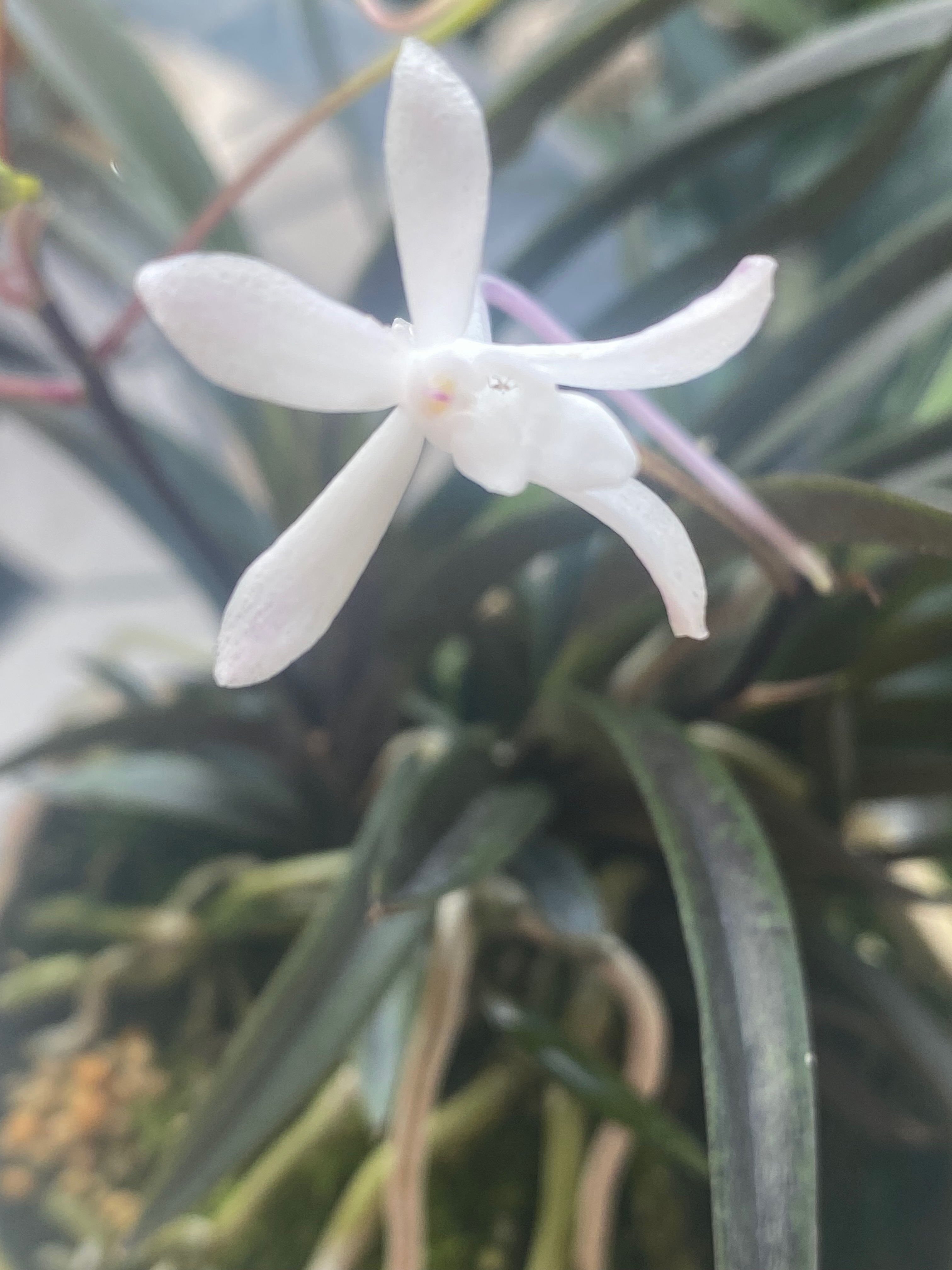
There is something particularly rewarding about seeing an orchid flower for the first time, especially when you have watched it grow and develop over time. This is the first flowering of my Vanda falcata ‘Barts Giant’ × Elegant.
Previously known as Neofinetia falcata, this species is now classified as Vanda falcata. The name change reflects a broader botanical reclassification, although many orchid growers and collectors still affectionately use the name Neofinetia.
Often called the Japanese wind orchid, Vanda falcata has a long history of cultivation and appreciation in East Asia. Its appeal extends well beyond its flowers. The foliage, growth habit, root tips and subtle variations in colour and form have all contributed to its reputation as an orchid worth studying.
My plant is particularly interesting because its first flowering is only part of the story. The pigmentation, emerging pink roots and overall presentation make this a specimen I will enjoy watching as it matures.
The Japanese wind orchid and its remarkable history
Vanda falcata has a special place in Japanese orchid culture. During the Edo period, particularly unusual and beautiful forms were highly prized by the ruling classes, including samurai. Over time, an elaborate collecting tradition developed around these plants.
In Japan, the ordinary wind orchid is known as fuuran, while exceptional cultivated forms are known as fuukiran, a name commonly translated as ‘rich and noble orchid’.
What makes this tradition so interesting is that collectors do not necessarily judge a plant by its flowers alone. The arrangement of its leaves, unusual growth patterns, variegation, colour, root-tip pigmentation and even the way the plant is presented can all contribute to its appeal.
Some cultivated forms have distinctive leaf shapes, while others display patterns of green, yellow or white. There are also plants with unusual red or purple colouring and strikingly coloured root tips.
This is a reminder that orchids can offer an extraordinary amount of visual interest even when they are not flowering.
Anthocyanins and the significance of pink pigmentation
One of the features that caught my attention with this particular cross is its apparent strength of pigmentation.
The reddish and pink tones visible in orchid tissues can be associated with anthocyanins, a group of water-soluble plant pigments responsible for many red, purple and blue colours in plants. These pigments are part of a much wider group of compounds called flavonoids.
Anthocyanins have several biological roles. Depending on the plant and its growing conditions, they can contribute to protection against excessive light, oxidative stress and other environmental challenges. Their expression can also be influenced by genetics, temperature and light exposure.
It is important to distinguish visible pigmentation from a scientifically measured anthocyanin concentration. Without laboratory analysis, I cannot claim to know the precise pigment content of this plant. However, the intensity of its pink and reddish colouring makes pigmentation an interesting characteristic to observe as the plant develops.
The Japanese appreciation of Vanda falcata provides an especially interesting connection here. Some traditional cultivars are valued for their unusual foliage colour, including red and purple tones, as well as distinctive patterns and root-tip colours.
These characteristics are not all the same thing: variegation, for example, involves differences in the distribution of pigments and photosynthetic tissue, while anthocyanin pigmentation produces red, pink or purple tones. Nevertheless, both demonstrate how much collectors can appreciate the plant itself, rather than waiting for a flower to appear.
Pink roots: another feature worth noticing
The roots are another highlight of this plant.
In the photographs, several emerging roots show noticeable pink colouring at their tips. Root-tip colour is an interesting feature in Vanda falcata culture, and the traditional Japanese collecting world places particular value on certain coloured root tips, especially ruby-red forms.
Pink, red, green and darker muddy-brown tones can all occur. These colours are part of the visual character of the plant and are especially easy to appreciate when roots are allowed to grow visibly outside the pot or growing medium.
It is tempting to assume that pink roots and pink leaf or stem pigmentation must have exactly the same cause. However, pigmentation can vary between different plant tissues, and the colour alone does not establish the precise pigment or its concentration.
For me, the emerging pink roots add another layer of interest to this first flowering. They are a reminder that an orchid’s beauty is not confined to the part that attracts the most immediate attention.
A handmade ceramic home
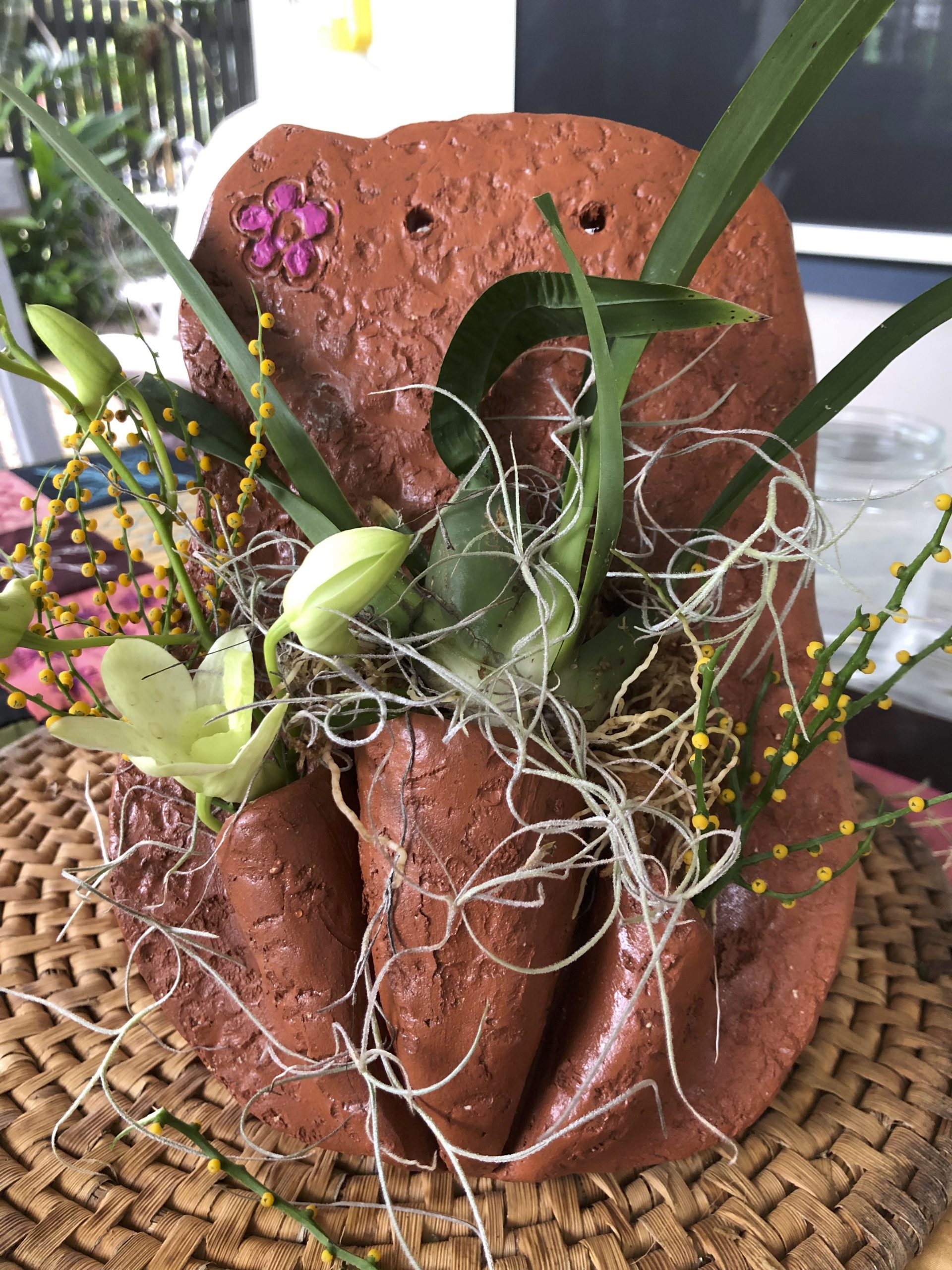
The presentation of this orchid is also personal. The ceramic pot is handmade by me, under my Little Flower Business creative work.
I enjoy making functional ceramics that have their own character, rather than treating a pot as simply a container. The colours, textures and illustrated surfaces of this piece create a setting for the plant while allowing its foliage and roots to remain visible.
There is a lovely connection between the Japanese tradition of appreciating Vanda falcata and the craftsmanship of its presentation. Traditional Japanese cultivation has long included carefully selected pots and considered arrangements that complement the plant.
I would not suggest that my handmade pot is a traditional Japanese fuukiran pot, but I do appreciate that same idea: the container and the orchid can be considered together as part of a complete visual composition.
For an orchid grower who also enjoys ceramics, this is one of the pleasures of combining two creative interests.
Looking forward to the next stage
This first flowering is an introduction rather than a final assessment of what this cross may become.
As the plant matures, I will be watching its growth habit, leaf development, root-tip colouring and future flowering. It will be interesting to see whether the pigmentation remains consistent and whether the plant develops further characteristics that make it distinctive.
Vanda falcata is a wonderful example of why it is worth looking beyond the flower. Its history, cultural significance and remarkable diversity of foliage and root characteristics make it an orchid that rewards close observation.
For now, I am enjoying this first flowering of my Vanda falcata ‘Barts Giant’ × Elegant, the delicate flowers, the pink roots and the combination of living plant and handmade ceramic.
Sometimes the greatest pleasure in growing orchids is not simply getting a plant to flower. It is discovering all the little details that make that particular plant special.
For more information about growing orchids in tropical Australia see here
For more information on growing orchids visit the American Orchid Society
Frequently Asked Questions
1. Is Vanda falcata the same as Neofinetia falcata?
Yes. Neofinetia falcata was the former botanical name for this species. It is now classified as Vanda falcata, although many orchid growers and collectors continue to use the familiar name Neofinetia.
2. Why is Vanda falcata called the Japanese wind orchid?
Vanda falcata is commonly known as the Japanese wind orchid. It has a long history of cultivation in Japan, where it is particularly admired for its delicate flowers, distinctive foliage and unusual growth characteristics.
3. What is the difference between fuuran and fuukiran?
Fuuran is the Japanese name commonly used for the ordinary wind orchid. Fuukiran refers to exceptional cultivated forms that have been selected and appreciated for distinctive characteristics such as leaf shape, variegation, colouration, growth habit and root-tip pigmentation.
4. Why do some Vanda falcata orchids have pink or red roots?
Pink and red root tips are recognised characteristics in some cultivated forms of Vanda falcata. These colours contribute to the plant’s ornamental appeal, particularly among collectors who appreciate the traditional Japanese fuukiran varieties.
5. What causes pink or purple pigmentation in orchids?
Pink, red and purple pigmentation in plants can be associated with anthocyanins, naturally occurring pigments belonging to the flavonoid group. Their expression can be influenced by genetics and environmental conditions, including light and temperature.
6. Are Vanda falcata orchids valued for their foliage as well as their flowers?
Absolutely. Foliage characteristics are an important part of their appeal. Collectors may value unusual leaf shapes, variegation, growth patterns, colouration and root-tip pigmentation, even when the plant is not flowering.
7. What makes Japanese fuukiran orchids special?
Fuukiran orchids have a long history of appreciation in Japan, particularly among collectors during the Edo period. Their value traditionally extends beyond flower quality to include the overall appearance of the plant, its foliage, roots and presentation.
8. Can handmade ceramic pots be used to display Vanda falcata?
Yes. A handmade ceramic pot can provide an attractive and individual presentation for Vanda falcata. However, the pot should also suit the orchid’s growing requirements, allowing appropriate drainage, airflow and root development.